
The Escalating Risk of Mass Violence in the U.S.

9 – 10:15 a.m.
Memorial Union, Alumni Lounge (Room 202) and Online
Dr. James Waller
Keene State College
Dr. James Waller is the Cohen Professor of Holocaust and Genocide Studies at Keene State College (NH-US). In addition, he serves as Director of Academic Programs for the Auschwitz Institute for the Prevention of Genocide and Mass Atrocities, an international NGO devoted to atrocity prevention. He is the author of six books, most notably his award-winning Becoming Evil: How Ordinary People Commit Genocide and Mass Killing, Confronting Evil: Engaging Our Responsibility to Prevent Genocide and A Troubled Sleep: Risk and Resilience in Contemporary Northern Ireland.
U.S. Diplomacy – Preventing Genocide
10:30 a.m. – 12 p.m.
Memorial Union, Alumni Lounge (Room 202)* and Online
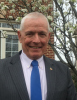
Ambassador Edward O'Donnell
Arizona State University
Ambassador (ret) Edward O’Donnell is a professor of practice in the School of Politics and Global Studies where he teaches courses on U.S. foreign policy, human rights, lessons of the Holocaust and preventing mass atrocities and genocide.
Ambassador O’Donnell was a career U.S. Foreign Service Officer serving in Afghanistan, Germany, Austria, Colombia, Panama and Paraguay and other positions in the State Department in Washington, D.C. He served as a negotiating Ambassador in multilateral and bilateral diplomatic assignments including Ambassador and Special Envoy for Holocaust issues and fighting Anti-Semitism. He also was Charge d’ Affaires, Deputy Chief of Mission, Consul General (Principal Officer), Economic Counselor and Commercial Attache. He also was Executive Assistant to three Under Secretaries and was an advisor on the Secretary’s policy planning staff.
He worked in Kabul, Afghanistan (2011 – 2014) as Senior Mentor/Advisor to the Afghan Minister of Counter Narcotics and also was a State Department inspector (2010 – 2011) in the Middle East Regional Office of the Inspector General, State Department. From 2009 – 2011, he worked for the Bureau of Congressional Relations as Acting Principal Deputy Assistant Secretary and earlier ran the State Department liaison office to the House of Representatives.
*This speaker will be presenting virtually and broadcast into the room.
Comparative Panel 4: Antisemitism, Hatred and Bigotry
12:20 – 2 p.m.
Memorial Union, Alumni Lounge (Room 202
Panelists

Dr. Ronet D. Bachman
University of Delaware
Ronet D. Bachman, PhD, worked as a statistician at the U.S. Department of Justice and is now a professor in the Department of Sociology and Criminal Justice at the University of Delaware. She is co-author of several books including Statistical Methods for Criminology and Criminal Justice, The Practice of Research in Criminology and Criminal Justice, Violence: The Enduring Problem, Murder American Style, Explaining Criminals and Crime: Essays in Contemporary Criminal Theory and Stress, Culture and Aggression. In addition, she is the author of Death and Violence on the Reservation along with many articles that examine the epidemiology and etiology of violence and victimization.

Special Agent Daniel Johnson FBI Phx. Office – Anti-Semitism
Special Agent Johnson investigates criminal civil rights violations for the FBI in Arizona. In that role, SA Johnson investigates hate crimes, color-of-law violations, FACE Act violations and international human rights violations (genocide, torture and war crimes).
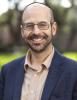
Dr. Joshua Shanes
College of Charleston
Joshua Shanes is Associate Professor of Jewish Studies, and Director of the Arnold Center for Israel Studies, at the College of Charleston. He has published widely on modern Jewish politics, culture and religion - as well as antisemitism and contemporary politics - in both academic and popular outlets including the Washington Post, Slate, Haaretz and Tablet. He is currently writing a history of Jewish Orthodoxy from its German origins to the 21st century for the "Key Words in Jewish Studies" series at Rutgers University Press.
Moderator: Dr. James Waller
Keene State College
Dr. James Waller is the Cohen Professor of Holocaust and Genocide Studies at Keene State College (NH-US). In addition, he serves as Director of Academic Programs for the Auschwitz Institute for the Prevention of Genocide and Mass Atrocities, an international NGO devoted to atrocity prevention. He is the author of six books, most notably his award-winning Becoming Evil: How Ordinary People Commit Genocide and Mass Killing, Confronting Evil: Engaging Our Responsibility to Prevent Genocide and A Troubled Sleep: Risk and Resilience in Contemporary Northern Ireland.
The Armenian Genocide Refugees at the Russo-Turkish Border Regions

3 – 4:15 p.m.
Memorial Union, Alumni Lounge (Room 202) and Online
Dr. Asya Darbinyan
Northern Arizona University
Dr. Asya Darbinyan is a Postdoctoral Scholar at the Martin-Springer Institute at Northern Arizona University, where she offers courses on the history of the Holocaust and on women’s experiences during genocide. She earned her PhD in history from the Strassler Center for Holocaust and Genocide Studies, Clark University. Her research and teaching expertise stand at the intersection of Armenian history, the history of the Russian Empire, genocide, refugees and humanitarian interventions. Before joining the Martin-Springer Institute, Dr. Darbinyan was a Postdoctoral Fellow in Holocaust and Genocide Studies at Stockton University and the Deputy Director of the Armenian Genocide Museum-Institute in Yerevan, Armenia.
Legacies of the Guatemalan Genocide

4:30 – 5:45 p.m.
Memorial Union, Alumni Lounge (Room 202)
Dr. Linda Green
University of Arizona
I am a socio-cultural and medical anthropologist. In my scholarship, I draw on insights garnered from more than two decades of field-based research that has centered on multi-dimensional aspects of violence, directed in particular, against indigenous peoples in three geographical regions: 1. in the rural highlands of Guatemala with Mayan widows from the counterinsurgency war and its aftermath that includes the long term consequences of state-sponsored violence, 2. in the U.S.-Mexico borderlands and beyond as large numbers of Mayan people flee their rural communities seeking refugee in the U.S., itself a legacy of war, in which ethnocide has followed closely on the heels of a genocide; and 3. in rural Alaska working over the past decade among Yup’ik people on social disruptions intrinsic to settler-colonial relations.
The Uighur Genocide in China

6 - 8 p.m.
Memorial Union, Alumni Lounge (Room 202) and Online
Naomi Kikoler
United States Holocaust Memorial Museum
Naomi Kikoler is director of the Simon-Skjodt Center for the Prevention of Genocide. She leads the Center’s policy, research and outreach. Prior, as deputy director she led the Center’s work on crises, including documenting the ISIS-led genocide. Previously she worked for the Global Center for the Responsibility to Protect, Amnesty International Canada, the U.N. Office of the Special Advisor on the Prevention of Genocide, the Office of the Prosecutor at the U.N. International Criminal Tribunal for Rwanda, the Brookings-Bern Project on Internal Displacement at the Brookings Institution, and the New School University. She is a graduate of McGill University’s Faculty of Law, Oxford University and the University of Toronto.