
We are Water: Genocide and the Destruction of Indigenous Water Relations

9:05 – 9:55 a.m.
Memorial Union, Alumni Lounge (Room 202) and Online
Dr. Andrew Woolford,
University of Manitoba, Canada
Andrew Woolford is a professor of sociology and criminology at the University of Manitoba and former president of the International Association of Genocide Scholars. He is the author of ‘This Benevolent Experiment’: Indigenous Boarding Schools, Genocide and Redress in the United States and Canada, The Politics of Restorative Justice and Between Justice and Certainty: Treaty-Making in British Columbia. He is co-editor of Did You See Us? Reunion, Remembrance, and Reclamation at an Urban Indian Residential School, Canada and Colonial Genocide, The Idea of a Human Rights Museum and Colonial Genocide in Indigenous North America.
Dr. Lawrence Bell
10:10 – 11 a.m.
Memorial Union, Alumni Lounge (Room 202)* and Online
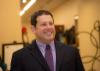
Dr. Lawrence Bell
Arizona Jewish Historical Society
*This speaker will be presenting virtually and broadcast into the room.
Ambassador Michaela Kuechler

11:15 a.m. – 12:05 p.m.
Memorial Union, Alumni Lounge (Room 202)* and Online
Ambassador Michaela Kuechler
Special Representative for Relations with Jewish Organizations
Ambassador Michaela Kuechler currently serves as the Special Representative for Relations with Jewish Organizations, Issues Relating to Antisemitism, International Sinti and Roma Affairs, and Holocaust Remembrance. Her portfolio includes a wide range of issues, including cooperation with international organizations such as the OSCE/ODIHR, UNESCO, the EU, as well as with Israel and France, in the fight against antisemitism; dialogue with Jewish organizations in Germany, the United States and Central and Eastern Europe; and the promotion of Holocaust remembrance projects as well as projects to commemorate the genocide of the Sinti and Roma. As chair of the International Holocaust Remembrance Alliance her work in particular addresses the denial, distortion and diminishing of the Holocaust.
*This speaker will be presenting virtually and broadcast into the room.
Comparative Panel 3: Genocide and Environmental Destruction
12:20 - 2 p.m.
Memorial Union, Alumni Lounge (Room 202) and Online
Panelists

Dr. Benjamin Lieberman
Fitchburg State University
Benjamin Lieberman received his PhD from the University of Chicago. He is the author of Terrible Fate: Ethnic Cleansing in the Making of Modern Europe, The Holocaust and Genocides in Europe, Remaking Identities: God, Nation and Race in World History and the co-author of Climate Change in Human History: Prehistory to the Present. He is a professor of history at Fitchburg State University.
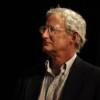
Dr. Eric Katz
New Jersey Institute of Technology
Eric Katz (BA Philosophy, Yale; PhD, Boston University) is professor emeritus of philosophy at the New Jersey Institute of Technology and Distinguished Senior Fellow at the Institute of Philosophy and Public Policy at George Mason University. He is the author of Anne Frank’s Tree: Nature’s Confrontation with Technology, Domination, and the Holocaust and Nature as Subject: Human Obligation and Natural Community. He is the editor of Death by Design: Science, Technology, and Engineering in Nazi Germany. He has co-edited (with Andrew Light) the collection Environmental Pragmatism and (with Andrew Light and David Rothenberg) the collection Beneath the Surface: Critical Essays in the Philosophy of Deep Ecology.

Dr. Karen Jarratt-Snider
Northern Arizona University
Karen Jarratt-Snider (Choctaw) is an Associate Professor in the Department of Applied Indigenous Studies at Northern Arizona University. Her expertise is in the areas of Indigenous environmental justice and policy; federal Indian policy, tribal administration, and tribal environmental management--all of which coalesce around the overall topic of Indigenous nation-building, sovereignty and self-determination. She has nearly twenty years of experience working with tribal nations’ projects in applied, community-based participatory research and community-engaged research.
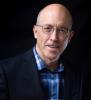
Moderator: Dr. Alex Alvarez
Northern Arizona University
Dr. Alex Alvarez is a professor in the Department of Criminology and Criminal Justice at Northern Arizona University. From 2001-2003, he was the founding Director of the Martin-Springer Institute for Teaching the Holocaust, Tolerance, and Humanitarian Values. In 2017-2018, he served as the Ida E. King Distinguished Visiting Scholar in Holocaust and Genocide Studies at Stockton University. His books include Governments, Citizens, and Genocide, Murder American Style, Violence: The Enduring Problem, Genocidal Crimes, Native America and the Question of Genocide and Unstable Ground: Climate Change, Conflict, and Genocide.
Nationalism, Identity and Race in the Second World War: Implications for the 21st Century
2:15 - 3:20 p.m.
Memorial Union, Alumni Lounge (Room 202) and Online
Dr. Alex Alvarez
Northern Arizona University
Dr. Alex Alvarez is a professor in the Department of Criminology and Criminal Justice at Northern Arizona University. From 2001-2003, he was the founding Director of the Martin-Springer Institute for Teaching the Holocaust, Tolerance, and Humanitarian Values. In 2017-2018, he served as the Ida E. King Distinguished Visiting Scholar in Holocaust and Genocide Studies at Stockton University. His books include Governments, Citizens, and Genocide, Murder American Style, Violence: The Enduring Problem, Genocidal Crimes, Native America and the Question of Genocide and Unstable Ground: Climate Change, Conflict, and Genocide.
Aftermath of Genocide: Rohingya Refugees in Bangladesh
3:45 – 5 p.m.
Memorial Union, Alumni Lounge (Room 202) and Online
Dr. William Simmons,
Director, Human Rights Practice Program and Distinguished Fellow UofA – Human Rights in the 21st Century
William Paul Simmons is the Director of the Human Rights Practice program at the University of Arizona. His research is highly interdisciplinary and draws upon many different methodologies, using theoretical, legal, qualitative and quantitative approaches to advance human rights for marginalized populations. His books include Joyful Human Rights, Human Rights Law and the Marginalized Other and Binational Human Rights: The U.S.-Mexico Experience. He has more than 25 years of experience as a human rights educator and researcher, including serving as a consultant in The Gambia, Senegal, Niger, Ghana, Nigeria, Mozambique, Bangladesh, China, Mexico and the United States.
The Armenian Genocide of 1915: Lessons for the 21st Century
6 - 8 p.m.
Memorial Union, Alumni Lounge (Room 202) and Online
Dr. Barlow Der Mugrdechian,
California State University, Fresno
Professor Barlow Der Mugrdechian has been teaching Armenian and Armenian Studies courses for more than 35 years at California State University, Fresno. He is the editor of the Armenian series of The Press at California State University, Fresno, and has published 14 books in the series. He teaches courses in the Armenian language, history, culture and the genocide.