
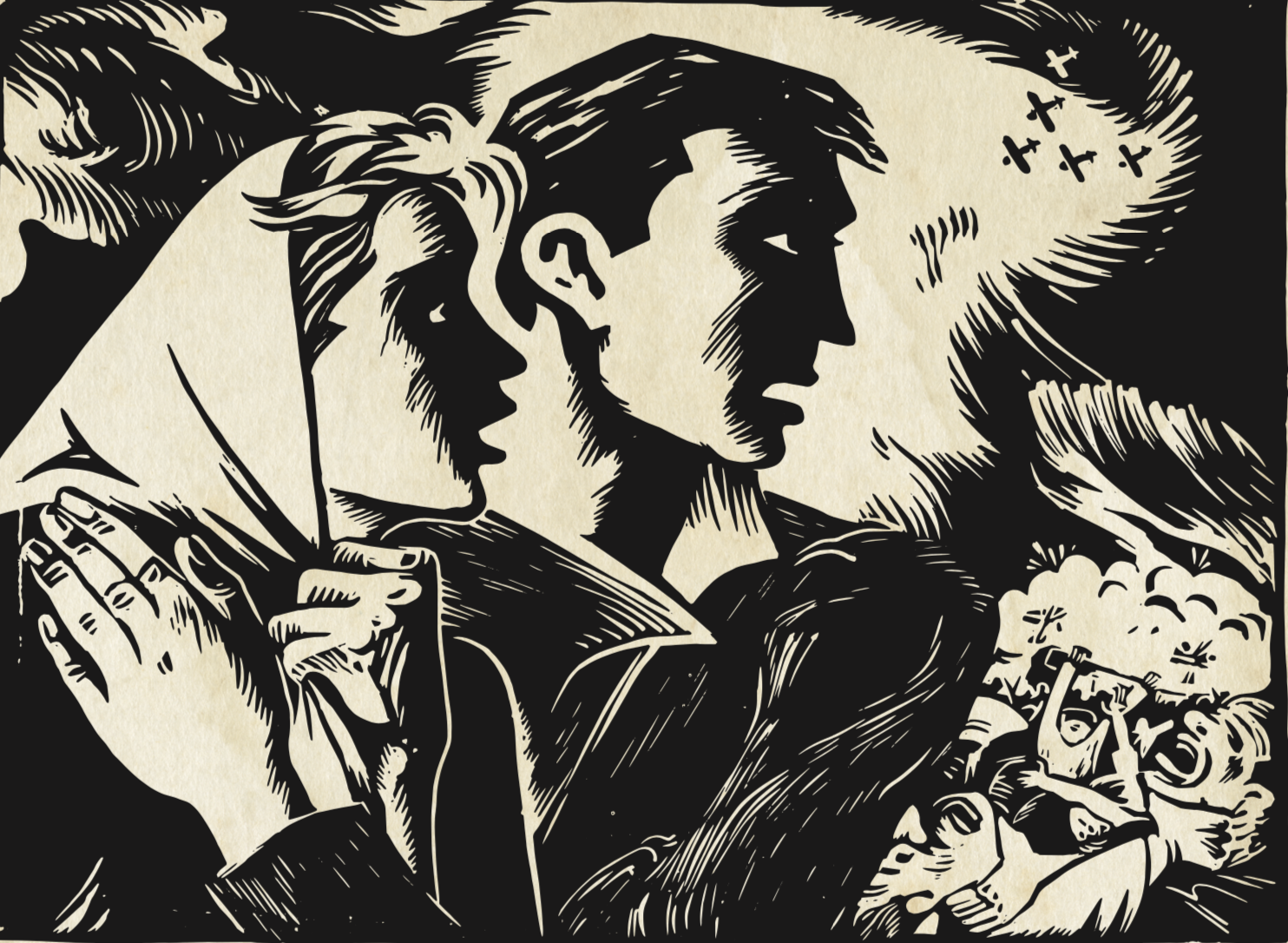
The Assyrian Genocide: Historical Overview and Analysis
9 – 10:15 a.m.
Memorial Union, Alumni Lounge (Room 202)
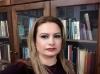
Dr. Anahit Khosroeva
Institute of History, National Academy of Sciences, Republic of Armenia
Professor Anahit Khosroeva is an Assyrian human rights defender and genocide scholar born in Armenia. She is a leading researcher at the Department of Armenian Genocide Studies in the Institute of History, Armenian National Academy of Sciences. Dr. Khosroeva is the author of a dozen research books and monographs, as well as numerous articles on the history of the Armenian/Assyrian/Greek genocide during the Ottoman period (1894-1923) in various languages. Her research interests include comparative genocide studies and human rights. She has presented at various worldwide academic and political conferences. On March 24, 2015, with the continuous efforts of Dr. Khosroeva, a month before the commemoration of the centennial of the Armenian Genocide, the National Assembly of the Republic of Armenia unanimously passed a resolution recognizing the Greek and Assyrian genocide committed by the Ottoman Empire during 1915-1923. For her outstanding services, Dr. Khosroeva has received numerous awards and state medals. Today she continues to be an active voice in bringing further awareness, recognition and justice for the Assyrians and Armenians using international human rights law.
Yahad-In Unum
10:30 a.m. - 12 p.m.
Memorial Union, Arizona Ballroom (Room 221) and Online
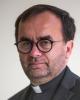
Father Patrick Desbois
Father Patrick Desbois is a distinguished author, university professor, historian, forensic detective and world-renowned human-rights activist. He has dedicated his life to fighting the bigotry that fuels the disease of genocide and bridging the divide between faiths. His ongoing work brings closure to the victims and survivors of genocide and calls for legal justice for the perpetrators.
He is the founder of Yahad-In Unum (“Together In One”), a non-profit organization dedicated to discovering genocidal practices wherever they are found around the world, providing documented proof of crimes against humanity, and a leading voice of protest on behalf of all past and present victims of mass murder.
In 2015, he became a Braman Endowed Professor of the Practice of the Forensic Study of the Holocaust at the Center for Jewish Civilization of Georgetown University. He has received numerous honors for his groundbreaking work, including the Humanitarian Award from the US Holocaust Museum and the 2017 Lantos Human Rights Prize. Very notably, Yahad-In Unum and Father Desbois have been lauded by world leaders including Pope Francis as well as French President, Emmanuel Macron, who awarded him the Légion d’honneur, France’s highest honor, for his work documenting the Holocaust.
Comparative Panel 2: Justice After Genocide
12:20 – 2 p.m.
Memorial Union, Alumni Lounge (Room 202)
Panelists
Dr. Jennie Burnet
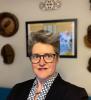
Georgia State University
Jennie Burnet is an associate professor of anthropology at Georgia State University. Her research explores the cultural and psychological aspects of war and genocide and the micro-level impact of large-scale social change in the context of conflict. She is the award-winning author of Genocide Lives in Us: Women, Memory and Silence in Rwanda. Her forthcoming book, To Save Heaven and Earth: Rescue during the Rwandan Genocide, examines how and why some Rwandans risked their lives to save Tutsi from the carnage. Her research has appeared in Politics & Gender, African Affairs, African Studies Review, and Women’s Studies International Forum.
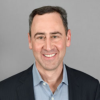
Dr. Daniel Rothenberg
Arizona State University
Daniel Rothenberg is a professor of practice in the School of Politics and Global Studies and Co-Director of the Center on the Future of War at ASU as well as a Senior Fellow at New America, a DC-based think tank. Rothenberg's research focuses on the lived experience of atrocities, political violence, war and severe repression, with a focus on oral histories as well as why people believe stories that are demonstrably untrue. He is the author of With These Hands, Testimonies, Memory of Silence: The Guatemalan Truth Commission Report, as well as the co-editor of Drone Wars: Transforming Conflict, Law, and Policy and Understanding the New Proxy Wars.
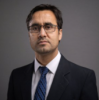
Dr. Parwez Besmel
Northern Arizona University
Parwez Besmel holds a PhD in politics and international affairs. His main teaching and research interests are political crime, transitional justice, international relations and Afghanistan. He has written and published several articles on mass atrocity, transitional justice and Afghanistan. He is currently a lecturer in the Department of Criminology and Criminal Justice at Northern Arizona University.
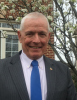
Moderator: Ambassador Edward O'Donnell
Arizona State University
Ambassador (ret) Edward O’Donnell is a professor of practice in the School of Politics and Global Studies where he teaches courses on U.S. foreign policy, human rights, lessons of the Holocaust and preventing mass atrocities and genocide.
Ambassador O’Donnell was a career U.S. Foreign Service Officer serving in Afghanistan, Germany, Austria, Colombia, Panama and Paraguay and other positions in the State Department in Washington, D.C. He served as a negotiating Ambassador in multilateral and bilateral diplomatic assignments including Ambassador and Special Envoy for Holocaust issues and fighting Anti-Semitism. He also was Charge d’ Affaires, Deputy Chief of Mission, Consul General (Principal Officer), Economic Counselor and Commercial Attache. He also was Executive Assistant to three Under Secretaries and was an advisor on the Secretary’s policy planning staff.
He worked in Kabul, Afghanistan (2011 – 2014) as Senior Mentor/Advisor to the Afghan Minister of Counter Narcotics and also was a State Department inspector (2010 – 2011) in the Middle East Regional Office of the Inspector General, State Department. From 2009 – 2011, he worked for the Bureau of Congressional Relations as Acting Principal Deputy Assistant Secretary and earlier ran the State Department liaison office to the House of Representatives.
The Shoah: A Singular Genocide
3 – 4:15 p.m.
Memorial Union, Alumni Lounge (Room 202) and Online
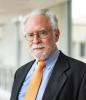
Dr. David Patterson
Hillel Feinberg Distinguished Chair in Holocaust Studies
Ackerman Center for Holocaust Studies, UT Dallas - The Essence of Antisemitism
David Patterson holds the Hillel A. Feinberg Distinguished Chair in Holocaust Studies at the University of Texas at Dallas and is a Senior Research Fellow for the Institute for the Study of Global Antisemitism and Policy. He has lectured at universities throughout the U.S. and abroad. A winner of the National Jewish Book Award and the Koret Jewish Book Award, he has published 40 books and more than 250 articles and essays on antisemitism, and the Holocaust. His most recent books are Judaism, Antisemitism, Holocaust: Making the Connections, Shoah and Torah, and Portraits: Elie Wiesel’s Hasidic Legacy.
Denial continues genocide worsening PTSD symptoms

4:30– 5:45 p.m.
Memorial Union, Alumni Lounge (Room 202) and Online
Dr. Esad Boškailo
University of Arizona, Mayo Medical School
Esad Boškailo was a family medicine physician from Bosnia who survived one year in six concentration camps during the Bosnian war in early '90s, and emerged with powerful new lessons for healing in an age of genocide. He subsequently got certified in the U.S. as a psychiatrist specializing in the treatment of psychological trauma and helping people find their meaning in life. He is an associate professor of psychiatry at the University of Arizona and an assistant professor at the Mayo Clinic Alix School of Medicine. He is a co-author of the book Wounded I Am More Awake, Finding Meaning After Terror, published in 2012.
Justice, Restitution and Memory. Germany and its Nazi Past
6 – 8 p.m.
Alumni Lounge (Room 202)
Panelists
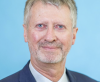
Stefan Schneider
Consul General of the Federal Republic of Germany in Los Angeles
Stefan Schneider started his diplomatic career for the Federal Republic of Germany in 1987 and his many assignments have taken him all over the world. He served as Head of the Legal and Consular Section in Thailand, Head of the Trade and Commerce Section in Bulgaria, Deputy Consul General in Miami, Counsellor for Political Affairs in Paris and Consul General in Izmir. Before being posted to Los Angeles, he served as Head of the Cultural Affairs Department at the German Embassy in Rome.
At the German Foreign Office, he was assigned to the Middle East desk, the Disarmament and Arms Control desk, the German as a Foreign Language division, and he served as Head of International Academic Exchange, also responsible for the Fulbright Program.
Ambassador Edward O'Donnell
Arizona State University
Ambassador (ret) Edward O’Donnell is a professor of practice in the School of Politics and Global Studies where he teaches courses on U.S. foreign policy, human rights, lessons of the Holocaust and preventing mass atrocities and genocide.
Ambassador O’Donnell was a career U.S. Foreign Service Officer serving in Afghanistan, Germany, Austria, Colombia, Panama and Paraguay and other positions in the State Department in Washington, D.C. He served as a negotiating Ambassador in multilateral and bilateral diplomatic assignments including Ambassador and Special Envoy for Holocaust issues and fighting Anti-Semitism. He also was Charge d’ Affaires, Deputy Chief of Mission, Consul General (Principal Officer), Economic Counselor and Commercial Attache. He also was Executive Assistant to three Under Secretaries and was an advisor on the Secretary’s policy planning staff.
He worked in Kabul, Afghanistan (2011 – 2014) as Senior Mentor/Advisor to the Afghan Minister of Counter Narcotics and also was a State Department inspector (2010 – 2011) in the Middle East Regional Office of the Inspector General, State Department. From 2009 – 2011, he worked for the Bureau of Congressional Relations as Acting Principal Deputy Assistant Secretary and earlier ran the State Department liaison office to the House of Representatives.

Dr. Volker Benkert
Arizona State University
Volker Benkert studied history and English at the Universities of Bonn, Edinburgh, St. Petersburg, and Fribourg. He graduated with a master's degree from the University of Bonn and a doctorate from the University of Potsdam. His research focuses on the impact of sudden regime change on biographies in 20th century Germany and Europe. In addition to relying on traditional sources, he utilizes extended biographical interviews. Furthermore, he is interested in the formation and function of discourses on the totalitarian past on an individual and collective level. Identifying pervasive discourse patterns particularly among ordinary Germans helps to reveal the transmission of often apologetic views of the past over generations.